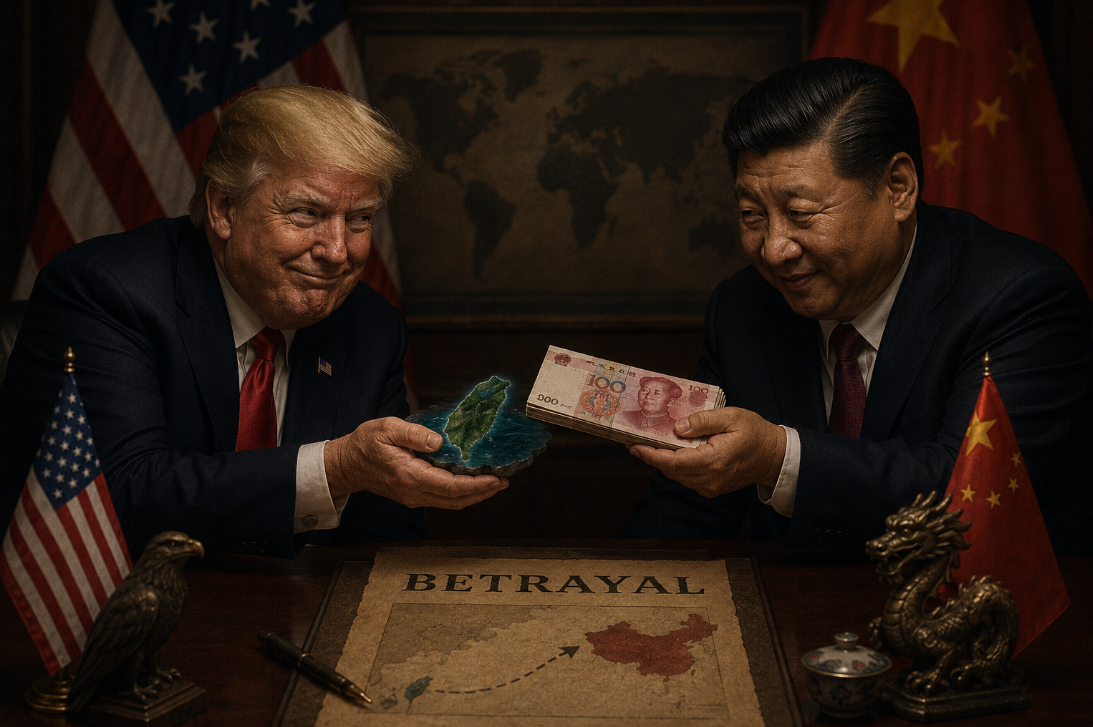
Trump sell taiwan
The Deal of the Century or a Geopolitical Betrayal: Did Donald Trump Sell Out Taiwan?
Author’s Commentary
The question of Taiwan’s fate remains the most sensitive and dangerous fault line in global politics. With Donald Trump’s return to the White House and his unique, business-like approach to international relations, the world is asking a fundamental question: Can the security of a democratic nation be traded away for commercial concessions? This analysis examines the evolution of relations between Trump and Taipei—from the unprecedented support during his first term to the dramatic events of recent days.
Part 1: The Balance Sheet – Pragmatism, Weapons, and Transactional Fear
To understand today’s dynamics, we must look at the actual facts from Trump’s first administration (2017–2021). On paper, his administration was the most strongly pro-Taiwan in decades. Trump started with a bang by holding an historic phone call with then-President Tsai Ing-wen and went on to approve record-breaking arms sales worth over $18 billion, aimed at turning the island into an impregnable “porcupine.” Laws were passed to facilitate high-level diplomatic visits, and decades-old restrictions on contacts between US and Taiwanese officials were lifted.
The problem, however, was never Trump’s actions, but his rhetoric. His “America First” philosophy transformed Taiwan from a moral commitment to defend democracy into a mere economic asset. In Washington’s corridors, it was frequently whispered that Trump compared Taiwan to the tip of a marker, while pointing to the massive desk in the Oval Office to represent China. Trump repeatedly accused the island of “stealing America’s chip business” and openly stated that Taipei should pay for its protection, noting that the US is “not an insurance company.” This deliberate “strategic ambiguity” sowed rapidly growing distrust and eroded the sense of absolute security in Taipei.
Part 2: The Beijing Summit – Did Trump Trade Away the Island’s Fate?
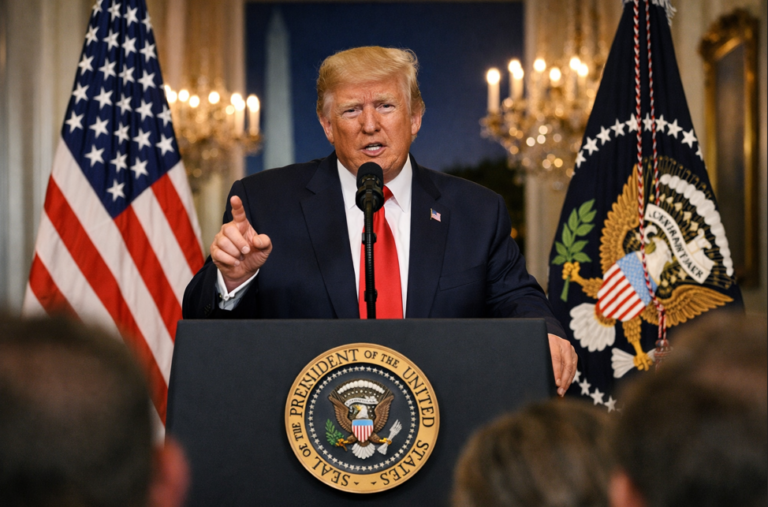
The doubts and worst fears of geopolitical analysts seemingly materialized during Donald Trump’s state visit to Beijing. In the framework of the summit with Chinese leader Xi Jinping, Trump demonstrated precisely the transactional approach that makes Taipei shudder.
During the talks, Xi Jinping delivered an exceptionally firm ultimatum, stating directly that the Taiwan issue is the “most important in US-China relations” and that any wrong move could lead to a direct military conflict between the two superpowers. Beijing’s primary goal was clear: to force Washington to block or delay an upcoming massive $14 billion arms deal for Taiwan, which includes Patriot missile systems.
Trump’s reaction aboard Air Force One after the meeting confirmed suspicions that the island is being used as a bargaining chip. Instead of categorically reaffirming the US commitment to arming Taipei, the American president stated that he had not yet decided whether to approve the deal. “We’re holding it in abeyance right now, and that’s dependent on China. Frankly, it’s a very good bargaining chip for us,” Trump told reporters.
In addition, he adopted rhetoric that indicated an alignment with Beijing’s positions, indirectly criticizing Taiwanese President Lai Ching-te by saying: “They have a guy there right now who wants independence… I’m not looking for somebody to be declaring independence.”
In exchange for this “freezing” of weapons to Taiwan, Trump was quick to boast about economic dividends for the US—commitments from China to purchase 200 Boeing aircraft, billions of dollars in agricultural products (soybeans), and the establishment of joint councils for trade and investment.
Did Trump ultimately betray Taiwan?
From a strictly legal standpoint—not yet. Secretary of State Marco Rubio was quick to assure the media that official US policy toward Taiwan remains unchanged. But in psychological and strategic terms, Trump did something highly dangerous: he opened the door and showed Beijing that Taiwan’s security has a market price. Turning the defensive capabilities of a threatened democracy into a “bargaining chip” sends a signal to Xi Jinping that the American shield over Taipei is no longer a matter of principle, but a business deal that China might just decide to buy out at some point.
Sources & References:
- For historical context on US-Taiwan arms sales and diplomatic policy, visit the American Institute in Taiwan (AIT).
About the Author