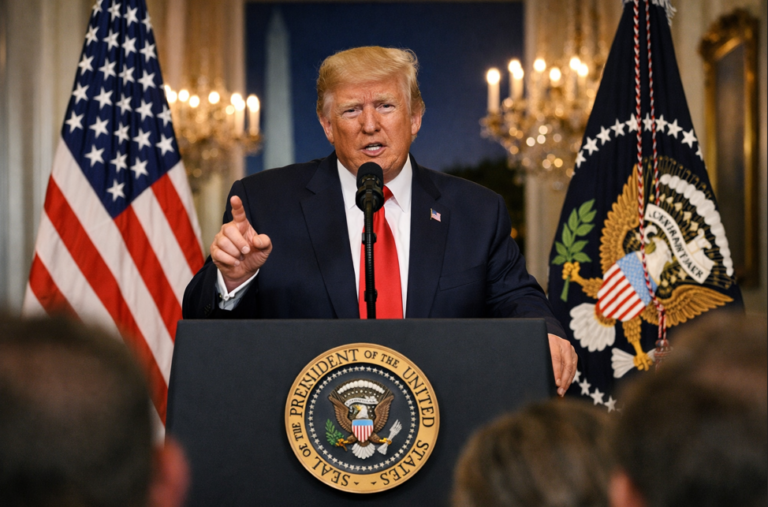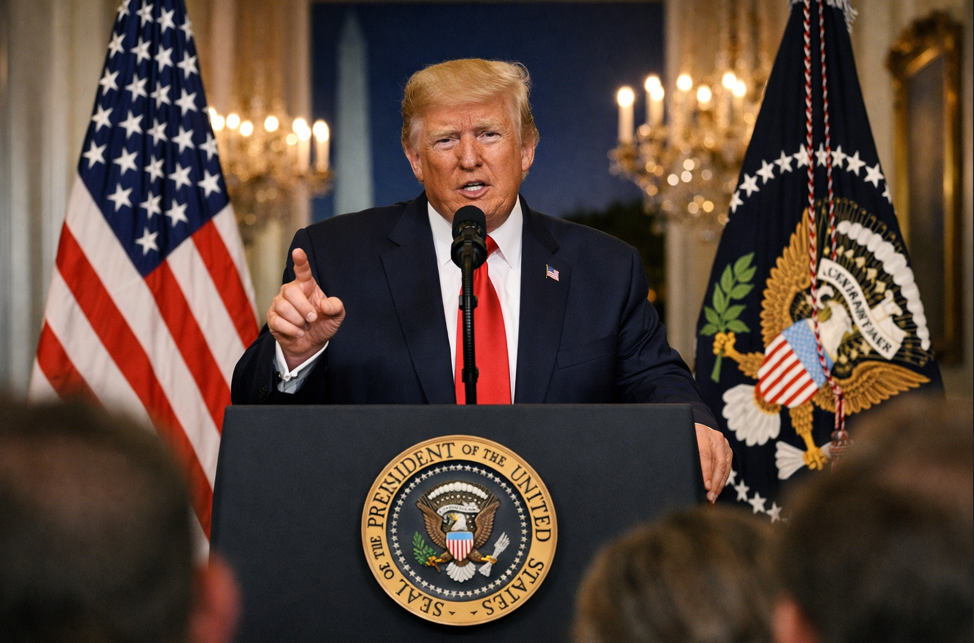
On the evening of June 23, President Donald Trump stepped up to the podium in the White House with the unmistakable confidence of a man who knew the nation was watching. The address had been teased for days, wrapped in speculation and political tension, and by the time the cameras went live, Washington felt like it was holding its breath.
What followed was a speech that blended Trump’s signature bravado with a surprisingly measured tone — a combination that left both supporters and critics parsing every line long after the broadcast ended
A Speech Framed as a Turning Point
From the opening moments, Trump positioned the address as a “course correction” for the country. He spoke of restoring strength, reasserting American priorities abroad, and tightening the government’s focus at home. The message was unmistakable: this was not just another policy update — it was a declaration of direction.
He highlighted national security, border control, and economic resilience as the pillars of his agenda for the coming months. While the themes were familiar, the delivery carried a sense of urgency, as if he wanted to signal that the next phase of his presidency would be more assertive, more disciplined, and more consequential.
Foreign Policy: A Promise of Toughness
One of the most closely watched segments of the speech centered on foreign policy. Trump emphasized a firmer stance in global affairs, vowing that the United States would not “hesitate to defend its interests.”
He referenced ongoing international tensions, reaffirming that American diplomacy would be backed by strength — a message clearly aimed at both allies and adversaries.
Observers noted that while the rhetoric was bold, it was also more structured than some of his earlier addresses, suggesting a deliberate effort to project stability.
Domestic Priorities: Security, Economy, and Control
On the home front, Trump doubled down on themes that have defined his political identity:
- Border security as a non‑negotiable priority
- Economic protectionism to shield American industries
- Criminal justice and public safety as central to national stability
He framed these issues not just as policy debates, but as existential questions about the country’s future — a rhetorical move that resonated strongly with his base.
A Calculated Tone, a Strategic Moment
Perhaps the most striking aspect of the address was its tone. Trump avoided the fiery improvisation that often characterizes his rallies. Instead, he delivered a speech that felt carefully engineered, almost presidential in the traditional sense.
Analysts quickly pointed out that this shift may have been intentional: a bid to reassure moderates, strengthen his standing ahead of key political battles, and project control during a turbulent period.
Public Reaction: Divided, Energized, and Fully Engaged
As expected, reactions split sharply along political lines. Supporters praised the speech as a strong, necessary reset, while critics argued it lacked specifics and leaned heavily on familiar talking points.
But one thing was undeniable: the address dominated the national conversation. Social media lit up within minutes, news networks launched instant analysis panels, and political commentators spent the night dissecting every phrase.
Why This Speech Matters
Trump’s June 23 address wasn’t just another entry in the presidential calendar. It was a moment designed to reassert authority, shape the narrative, and signal the next chapter of his administration.
Whether it ultimately succeeds in shifting public sentiment remains to be seen — but for now, it has undeniably reset the political atmosphere in Washington.
About the Author